Colosseum - Rome, Italy - Two Thousand Years Written in Stone
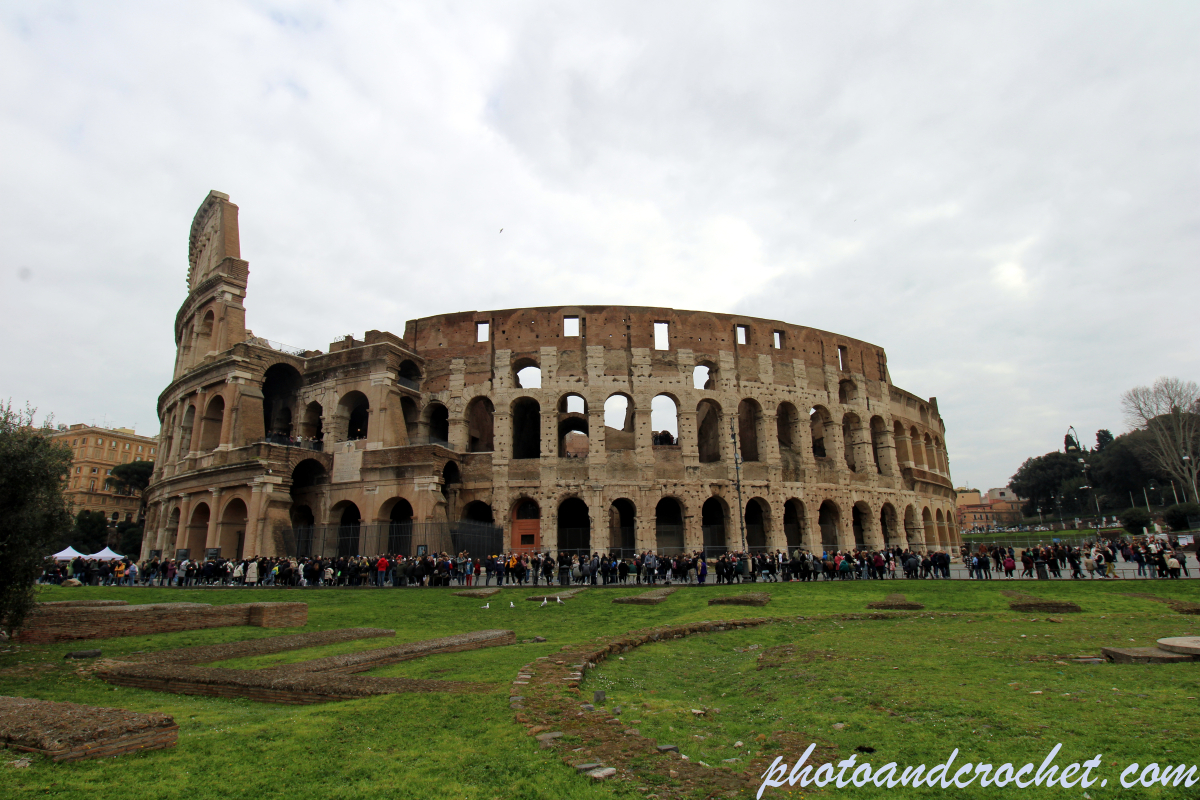
The weathered side of the Colosseum rises beyond the archaeological landscape, revealing the exposed inner structure of Rome’s ancient Flavian Amphitheatre.
The weathered southern side of the Colosseum reveals a very different face of Rome’s great ancient amphitheatre, with sections of its inner structure exposed where much of the original outer wall has been lost. Seen across the grassy archaeological foreground, the surviving arches and massive masonry illustrate both the enormous scale of the building and the effects of almost two thousand years of earthquakes, stone removal and changing use. Known in antiquity as the Flavian Amphitheatre, the Colosseum was begun under Emperor Vespasian around AD 70 and inaugurated by his son Titus in AD 80, with further modifications made under Domitian. The building originally presented a continuous monumental exterior around its elliptical perimeter, but major earthquakes during the medieval period contributed to the collapse of substantial sections. Stone from the damaged monument was subsequently reused in buildings elsewhere in Rome. Despite these losses, the Colosseum remains the largest ancient amphitheatre ever constructed and one of the most powerful surviving symbols of Imperial Rome.
You have to be logged in to leave a comment
Comments
No comments yet.
Colosseum - Rome, Italy - Two Thousand Years Written in Stone
by Dieter
Uploaded on February 22, 2025
Prev | Next |
| Camera: | Canon |
| Model: | Canon EOS 2000D |
| Creation Date: | 2025:02:21 11:24:28 |
| Image width: | 6000 px |
| Image height: | 4000 px |
| Image size: | 16.24MB |
| Aperature: | f/11.0 |
| Exposure: | 1/125 |
| ISO - speed: | 100 |
License for images free to download:
Creative Commons CC BY-NC-ND 4.0
Please give the image a rating.
The average rating is 2.96.