The Hidden Caves Beneath the Mellieħa Cross – Exploring a Forgotten Underground World
A fascinating exploration of the little-known caves hidden beneath the Mellieħa Cross, revealing rock-cut chambers, narrow passages, carved niches and intriguing clues that may point to a forgotten chapter of Malta's cave-dwelling past.
Most visitors who climb the hill to the famous Mellieħa Cross do so to enjoy the spectacular views over Mellieħa Bay and the surrounding countryside. Standing prominently above the landscape, the cross has become one of the area's most recognizable landmarks. Yet hidden beneath the cliffs below lies a remarkable collection of caves, chambers and rock-cut spaces that few visitors ever notice.
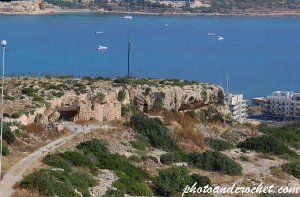 My exploration of these caves began out of simple curiosity. While photographing the hillside below the cross, I noticed a number of openings that appeared different from the natural cavities commonly found in Malta's limestone cliffs. As I continued to investigate, it quickly became clear that these were not isolated features. Instead, a series of caves, chambers, corridors and rock-cut steps appeared along the hillside, suggesting a much more extensive complex than expected.
The Mellieħa region is already known for its historical association with cave habitation. The nearby Għar u Casa cave settlement provides well-documented evidence that natural caves were once adapted into homes, storage spaces and agricultural shelters. Historical records show that cave dwelling remained part of rural life in parts of Malta until relatively recent times. This broader historical context makes the caves beneath the Mellieħa Cross particularly interesting.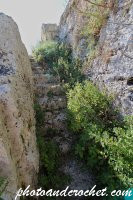
Following a narrow path beneath the cross reveals a surprising number of cavities and chambers cut into the limestone hillside. Some appear largely natural, while others show features that suggest deliberate modification. Throughout several of the caves, niches can be seen carved into the rock walls. Openings between chambers often display regular shapes that appear difficult to explain through natural erosion alone. In several locations, rock-cut steps provide access to caves situated higher on the slope.
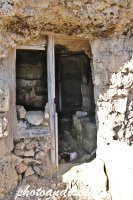 One of the most fascinating caves consists of several interconnected chambers linked by narrow corridors. Moving through these passages creates the impression of exploring a structure that developed over time. The chambers vary in size and shape, while the corridors occasionally reveal niches and recesses that may once have served practical purposes. Whether intended for storage, shelter or another function entirely remains unknown.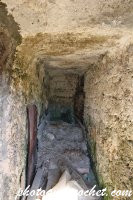
Another cave appears to contain features that could have been associated with agricultural use. The layout resembles shelters historically used for animals or storage in rural Malta. While such interpretations remain speculative, the combination of enclosed spaces, modified surfaces and accessible entrances suggests that these caves may once have played an important role in the daily lives of people living in the area.
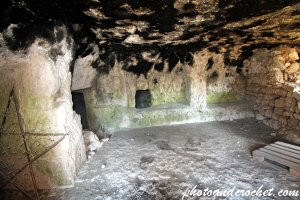 Particularly intriguing are the numerous rock-cut features observed throughout the complex. In several chambers, niches have been carved into the walls. Some are small and shallow, while others are larger and more pronounced. Their exact purpose is impossible to determine without archaeological investigation, but similar features elsewhere in Malta have been associated with storage, shelving and other domestic or agricultural activities.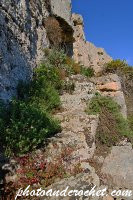
The most extensive cave discovered during the exploration is reached by a series of overgrown stone-cut steps. Behind its entrance lies a chamber from which several narrow corridors extend deeper into the hillside. The internal layout is surprisingly complex. Some passages continue into additional spaces, while others terminate after short 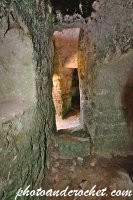 distances. The overall impression is of a cave that may have been modified repeatedly over a long period.
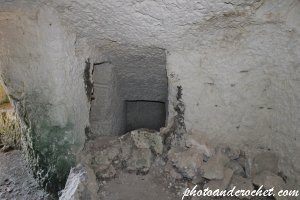
Perhaps the most intriguing area lies near the end of the explored route. Here, a partially open space contains large amounts of fallen limestone blocks and rubble. At first glance it appears to be nothing more than a collapsed section of cliff. However, closer examination raises interesting possibilities. The distribution of debris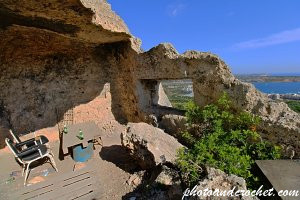 suggests that a roof may once have existed above the space. Even more striking is a surviving rectangular opening in one remaining wall. Looking through this opening reveals a magnificent view across Mellieħa Bay.
If this area was once enclosed, the opening may have functioned as a window, allowing light and ventilation into the interior. Such an interpretation remains entirely speculative. Natural geological processes are capable of creating surprisingly regular formations. Nevertheless, when viewed alongside the rock-cut steps, niches, corridors and modified surfaces found throughout the surrounding caves, the possibility that this area once formed part of a larger enclosed 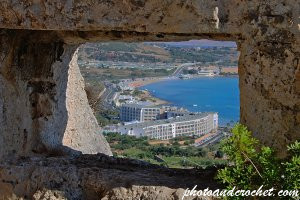 structure cannot easily be dismissed.
The greatest mystery surrounding the caves beneath the Mellieħa Cross is the absence of readily available documentation. Were these caves used as homes? Did they serve as storage chambers, agricultural shelters or animal enclosures? Were they occupied continuously or only seasonally? Could some of the modifications date back centuries while others are relatively recent? At present there are no definitive answers.
What is clear, however, is that these caves represent a fascinating and largely overlooked part of Malta's cultural landscape. Hidden beneath one of the island's most visited viewpoints, they offer a rare glimpse into the relationship between people and the limestone environment that has shaped life in Malta for thousands of years.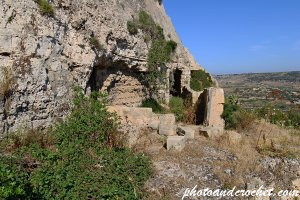
Whether future archaeological investigations eventually confirm habitation, agricultural use or some entirely different purpose, the caves beneath the Mellieħa Cross deserve greater attention. Until then they remain silent witnesses to a forgotten chapter of Mellieħa's history, overlooking the bay below while keeping their secrets hidden within the limestone cliffs.